
DeKalb County Criminal Court Records
A criminal court record is the case file that follows a prosecution through court. In DeKalb County, felony prosecutions are handled in Superior Court after the District Attorney files formal charges by indictment or accusation. State Court handles misdemeanors, including many DUI and traffic-related criminal matters. Magistrate Court handles criminal arrest warrants, first appearances, county ordinance matters, and preliminary criminal proceedings, but the full prosecution record may later move to State or Superior Court depending on the charge.
The DeKalb District Attorney prosecutes felony offenses in the DeKalb Judicial Circuit. The DeKalb Solicitor-General prosecutes misdemeanors in State Court, including domestic violence, elder abuse, cruelty to children, vehicular homicide, DUI, harassment, stalking, trespassing, and animal cruelty. A criminal court file tracks what the prosecutor filed and what the court did with it. For the arrest-to-charge path itself, see DeKalb County arrest records and court charges.
The DeKalb DA page is one of the official criminal-court sources assigned to this page through the manifest.
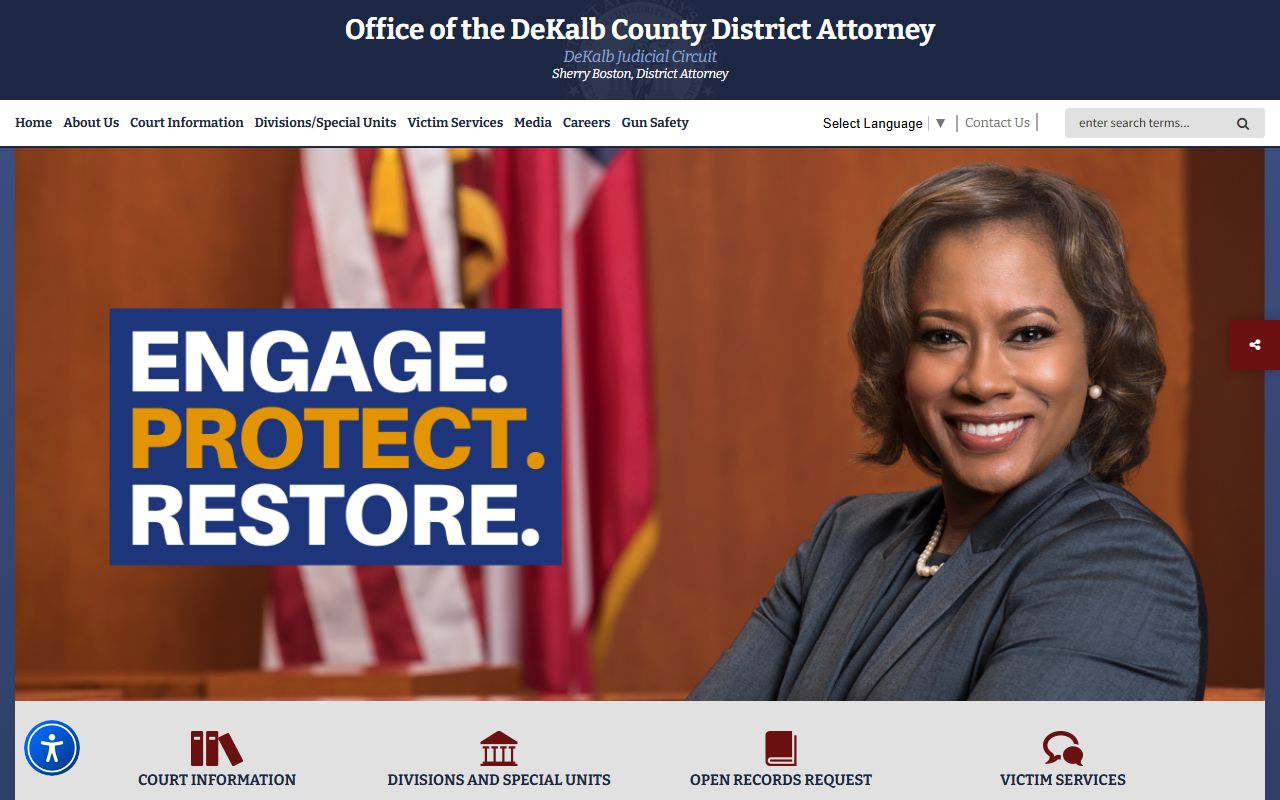
That office controls felony prosecution decisions, while the clerk controls filed Superior Court criminal records and certified copies.
Search DeKalb County Criminal Records
DeKalb Superior Court and the Clerk of Superior Court link criminal users to the Odyssey Judicial Information System. The Clerk's criminal page identifies the portal as the criminal record search path and also provides information about certified final disposition copies. The Sheriff's Office contact page says the DeKalb Online Judicial System can show detailed inmate information such as arrest dates, criminal or civil charges, and court dispositions.
- Start with the court. Felony case files belong in Superior Court, while misdemeanor prosecutions usually belong in State Court.
- Search the DeKalb portal by defendant name or case number. Use spelling variants for names.
- Review the docket entries for indictment, accusation, arraignment, motions, plea, trial, disposition, and sentence.
- Check whether the record is pending, disposed, restricted, sealed, transferred, or missing public document images.
- Request a certified final disposition from the Clerk of Superior Court when an official copy is needed.
Statewide case-document access may also run through re:SearchGA. State criminal-history restriction and criminal-history access issues are separate from a local court docket. A criminal-history report can be restricted under Georgia law while a court file may still need a separate sealing order.
DeKalb County Criminal Case Flow
DeKalb Superior Court states that felony criminal cases are not assigned to a specific judge until the District Attorney brings charges. Charges proceed by grand jury indictment or by accusation drawn by the District Attorney, and then the case is assigned to one of the Superior Court judges after filing with the Clerk. Misdemeanor cases in State Court follow a different prosecution track through the Solicitor-General.
Case flow: Charges Filed › Arraignment › Pretrial and Motions › Plea or Trial › Disposition › Sentencing
| Stage | What the Criminal Court Record May Show |
|---|---|
| Charges filed | Indictment, accusation, warrant, complaint, count list, offense text, or statute reference. |
| Arraignment | Formal reading or waiver of charges and the defendant's plea. |
| Pretrial and motions | Discovery disputes, bond motions, suppression motions, continuances, and court orders. |
| Plea or trial | Guilty plea, not guilty plea, nolo contendere plea, jury trial, bench trial, verdict, or acquittal. |
| Disposition | Final or current result for each count, such as guilty, dismissed, nolle prosequi, or not guilty. |
| Sentencing | Jail, prison, probation, fines, restitution, conditions, and final disposition documents where public. |
The assigned image from the DA biography page identifies the District Attorney's felony role and office scale.
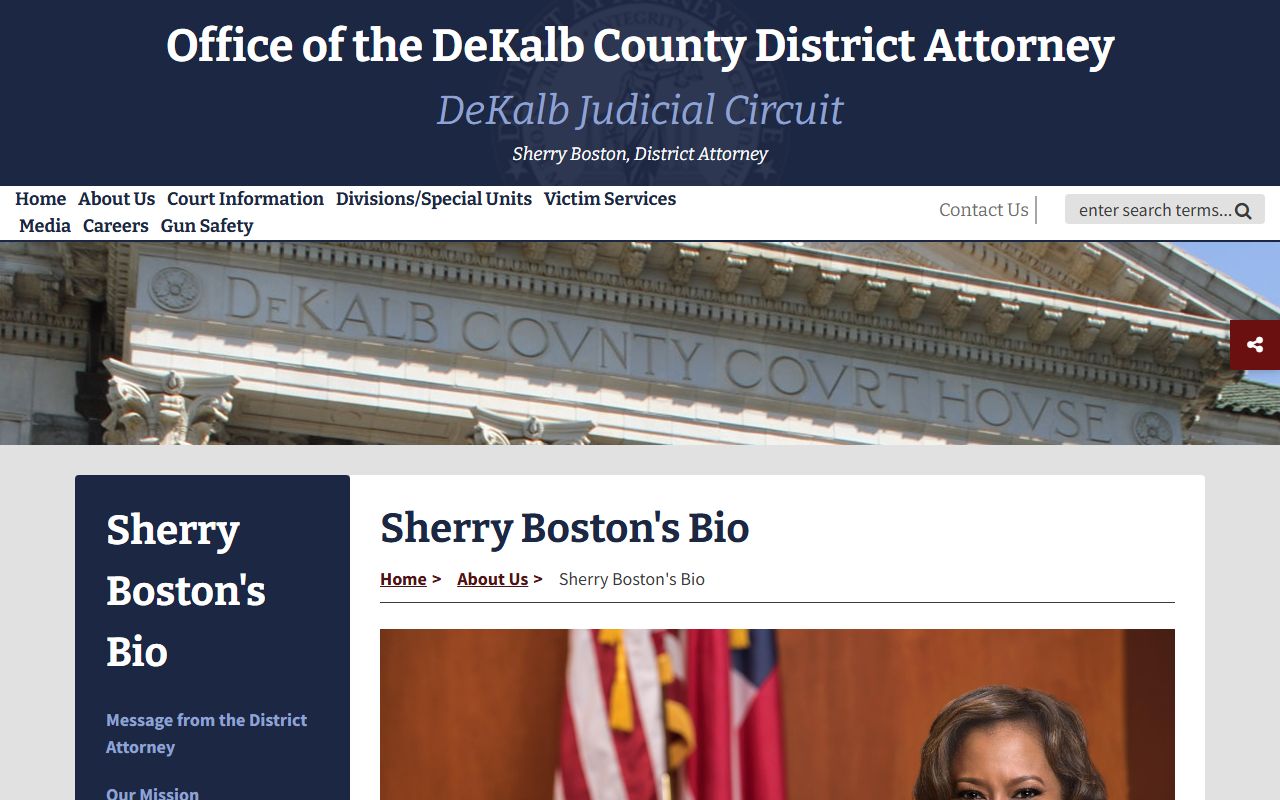
Felony charging decisions affect when a Superior Court criminal file becomes searchable as a case rather than just an arrest or warrant event.
What DeKalb Criminal Records Show
A DeKalb County criminal court record should be read count by count. One case may contain more than one charge, and each count can have its own plea, amendment, dismissal, conviction, or sentence. The docket may show the event history, while document access may be limited by portal permissions, redactions, copy fees, or clerk review.
| Field | What It Shows |
|---|---|
| Case number | The criminal case identifier used by the court and clerk for lookup and copies. |
| Defendant | The person charged, often styled State of Georgia v. defendant. |
| Court and division | Superior Court, State Court, Magistrate preliminary matter, or municipal court if outside the county court path. |
| Charging document | Indictment, accusation, warrant paperwork, complaint, or other filed charge source. |
| Plea | Guilty, not guilty, nolo contendere, which means no contest, or later amended plea information. |
| Docket entries | Arraignment, bond, hearing, motion, continuance, order, trial, plea, verdict, disposition, or sentence events. |
| Disposition | The final or current outcome for the case or each count. |
| Sentence | Custody, probation, fine, restitution, court costs, or conditions if imposed and public. |
DeKalb Charges vs Convictions
A charge is an allegation filed in court. A conviction is an outcome after a guilty plea, no-contest plea where treated as a conviction, verdict, or other adjudication that results in guilt. DeKalb criminal court records can show charges that were amended, reduced, dismissed, nolle prossed, or declined for further prosecution. Do not read the first charge list as the final result without checking the disposition and sentence fields.
| Point | Charge | Conviction |
|---|---|---|
| Meaning | An alleged offense filed by the prosecutor or presented in a charging document. | A final adjudication or plea outcome showing guilt on a count. |
| Record location | Indictment, accusation, complaint, warrant, docket entry, or charge list. | Disposition, judgment, sentencing entry, or final disposition copy. |
| Can change | Yes. Charges can be amended, reduced, dropped, or dismissed. | May change only through appeal, withdrawal, correction, restriction, or other court order. |
| How to verify | Read the full docket and charging document. | Request the final disposition from the clerk when an official answer is needed. |
DeKalb County Criminal Case Offices
The DA's administration page lists the DeKalb District Attorney at 556 N. McDonough Street, Suite 700, Decatur, GA 30030, phone 404-371-2561. The office includes trial, records, victim services, appeals, child crimes, elder crimes, human trafficking and internet crimes, anti-corruption, juvenile, investigations, and open-records units. These units do not replace the clerk's court record role, but they explain why felony criminal files may involve prosecutor-held records as well as court-held records.
The Solicitor-General's Office is led by Donna Coleman-Stribling and prosecutes more than 13,000 misdemeanor crimes yearly. Its main office is at 556 North McDonough Street, Suite 500, Decatur, GA 30030, phone 404-371-2201. Traffic division matters use 3630 Camp Circle, Decatur, GA 30032. The office announced a Prosecutor by Karpel SaaS launch on April 27, 2026, to improve efficiency and communication in a high-volume misdemeanor system.
The manifest includes the DA administration page as a criminal-court source.
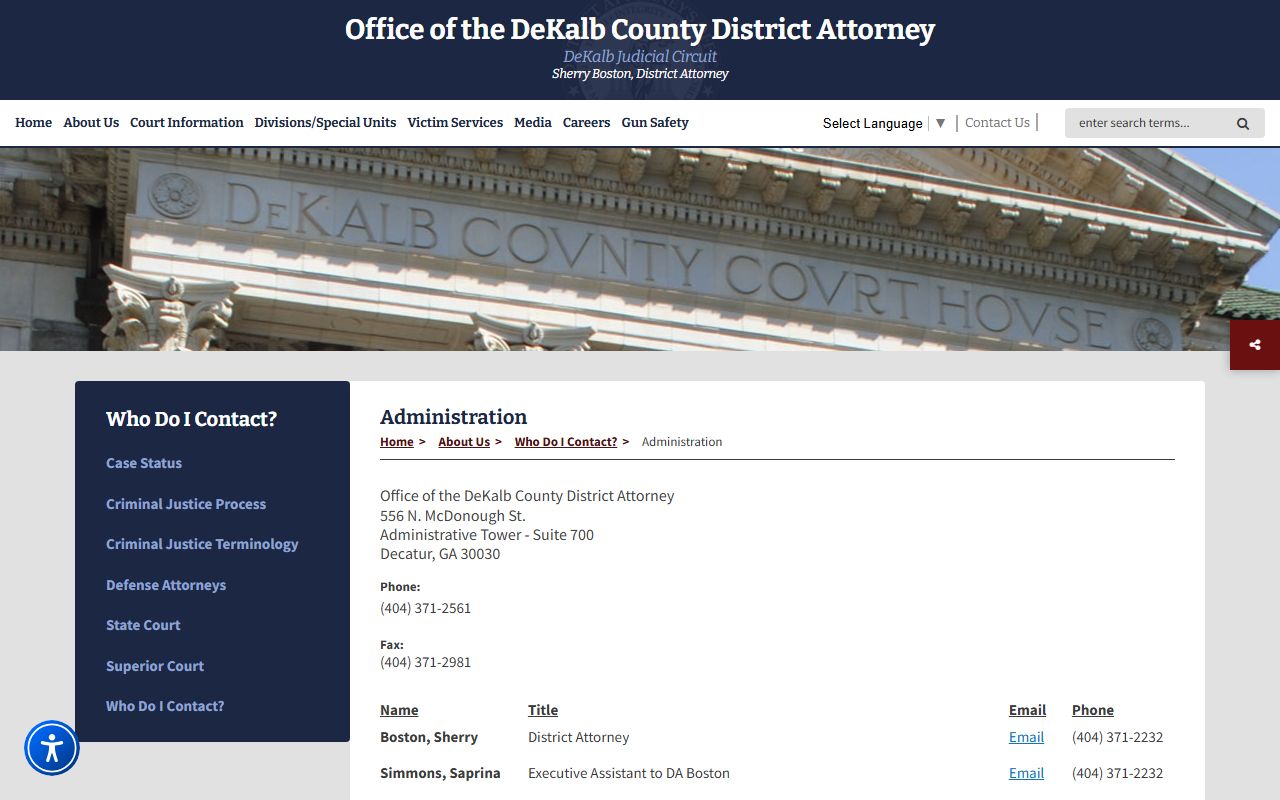
Use prosecutor contact information for prosecution office questions, but use the clerk for filed court copies and certified dispositions.
The Solicitor-General home page is the official source for misdemeanor prosecution information.
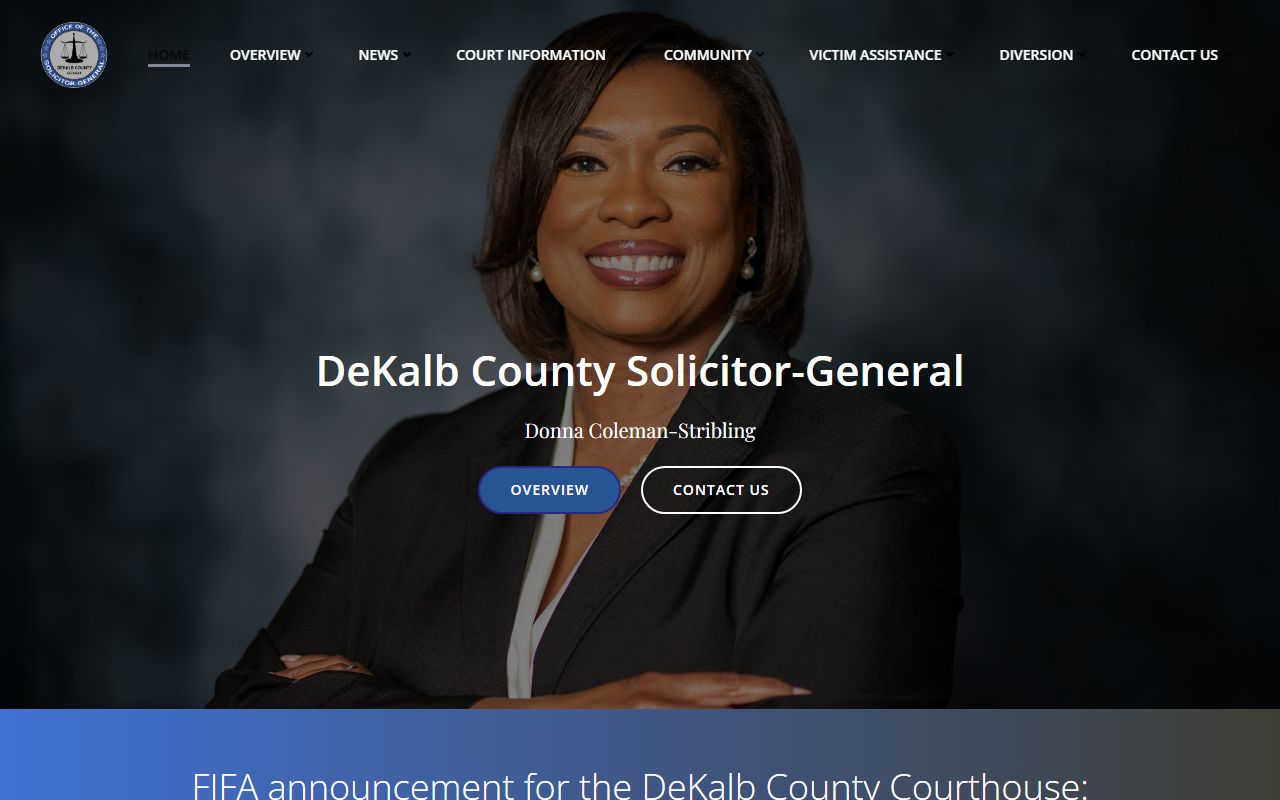
That distinction matters because a misdemeanor court file may be searched through State Court while prosecution questions go to the Solicitor-General.
Sealed vs Restricted Criminal Records
Georgia commonly uses record restriction rather than saying a record is destroyed. The GBI record restriction page explains O.C.G.A. 35-3-37. Eligible criminal-history records can be restricted from non-criminal-justice access when approved by the prosecutor or court. For arrests after July 1, 2013, the person generally contacts the prosecutor. For arrests before that date, the person applies at the arresting agency.
| Point | Sealed Court File | Restricted Criminal History |
|---|---|---|
| Main effect | Limits public access to court documents or docket details by court order. | Limits non-criminal-justice access to eligible criminal-history information. |
| Who controls it | The court and clerk, under court rules and orders. | Prosecutor, arresting agency, court, and Georgia Crime Information Center processes. |
| What remains | Judicial or law-enforcement users may retain access when allowed. | It does not automatically erase every court docket, jail entry, or archived document. |
| DeKalb path | Check the court that filed the case and any sealing order. | Felony matters involve the DA; misdemeanors often involve the Solicitor-General. |
Juvenile cases, adoption files, mental-health proceedings, protected identifiers, and certain protective-order information may also be restricted. The criminal court record should be read with those limits in mind, especially when a docket appears incomplete.
DeKalb Criminal Defense Records
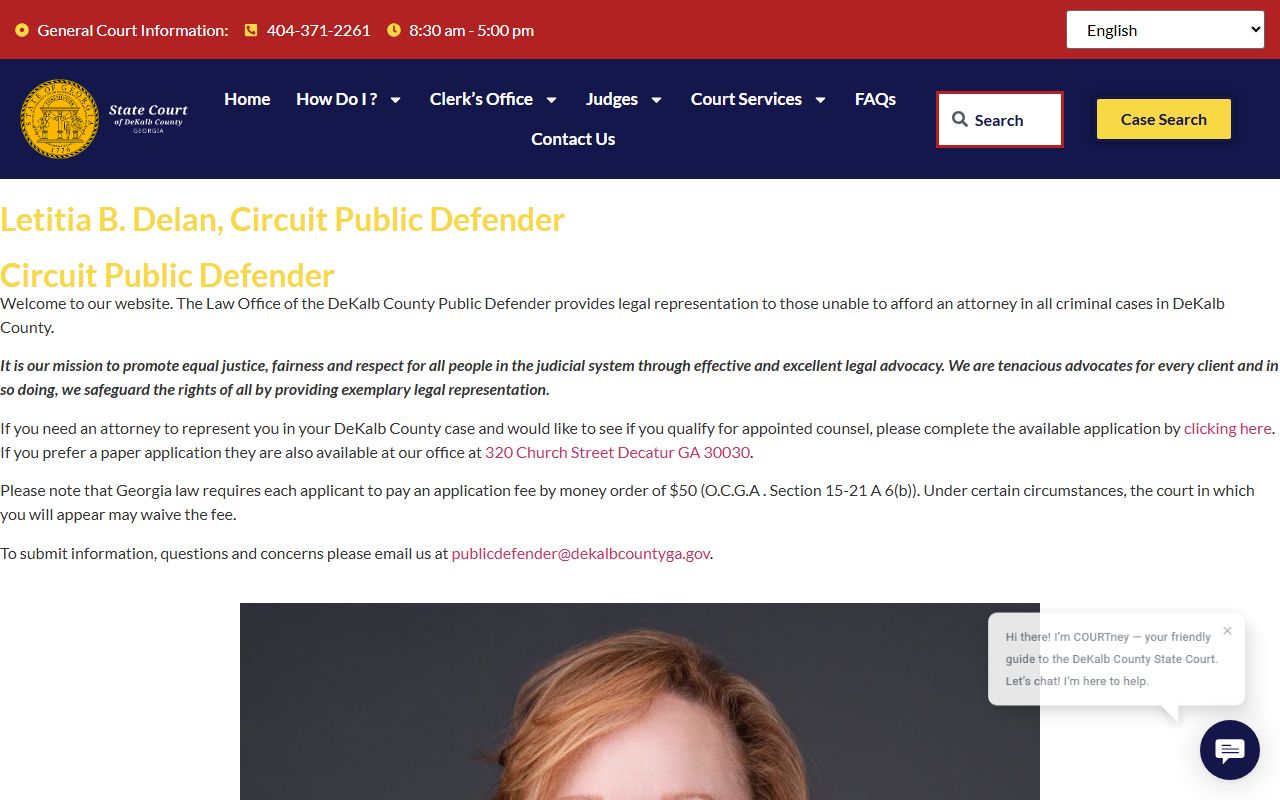
The Law Office of the Public Defender DeKalb County represents people unable to afford counsel in criminal cases. It is located at 320 Church Street, Decatur, GA 30030, phone 404-371-2222, and its listed hours are Monday through Friday, 8:30 AM to 5:00 PM. The office is led by Circuit Public Defender Letitia B. Delan. Georgia law requires a $50 application fee by money order under O.C.G.A. 15-21A-6(b), though the court may waive it in some circumstances.
The public defender page is included in the assigned images for DeKalb criminal court records.
Defense-office records are not the same as public court files. Filed motions and orders belong in the case record, while attorney work product is not a public court record merely because a criminal case exists.
The Solicitor-General contact page is also assigned from the official contact source.
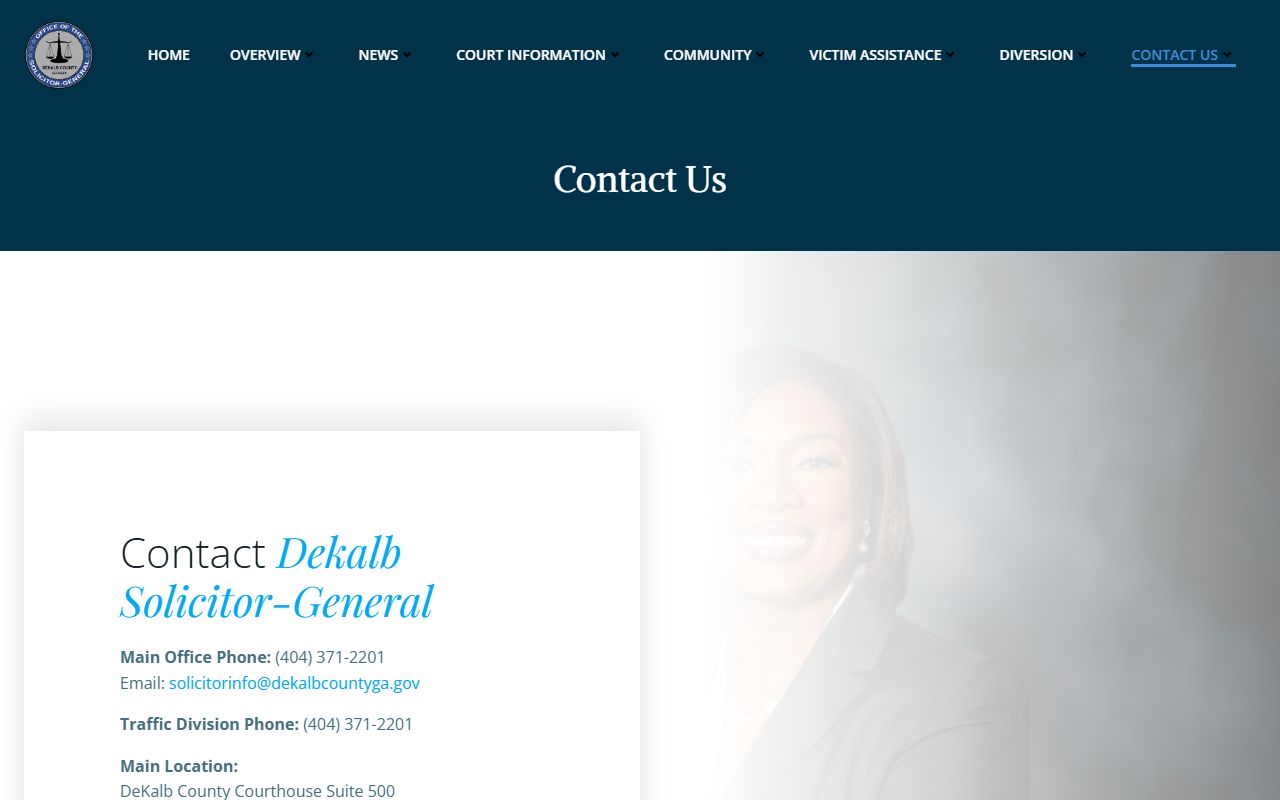
That contact path is useful for misdemeanor prosecution questions, while the court docket and clerk file remain the authoritative court record.