
DeKalb County Arrest Records and Charges
DeKalb County arrest records begin on the law-enforcement side. They may connect to an arrest date, booking event, warrant, jail entry, bond information, and a first appearance. The Sheriff's contact page says detailed inmate information such as arrest dates, criminal or civil charges, and court dispositions should be checked through the DeKalb Online Judicial System. Current custody information also connects to the Sheriff's inmate lookup, while court charges after arrest move into the court and prosecutor systems.
A charge record is different. It identifies the alleged offenses filed or tracked in court. For felonies, the DeKalb District Attorney files charges in Superior Court by indictment or accusation. For misdemeanors, the DeKalb Solicitor-General prosecutes in State Court. Magistrate Court handles criminal arrest warrants and preliminary matters. The full case file, including pleas, motions, disposition, and sentence, belongs with DeKalb County criminal court records.
The Sheriff's contact page is assigned to this arrest-records page through the manifest from the official Sheriff's contact source.
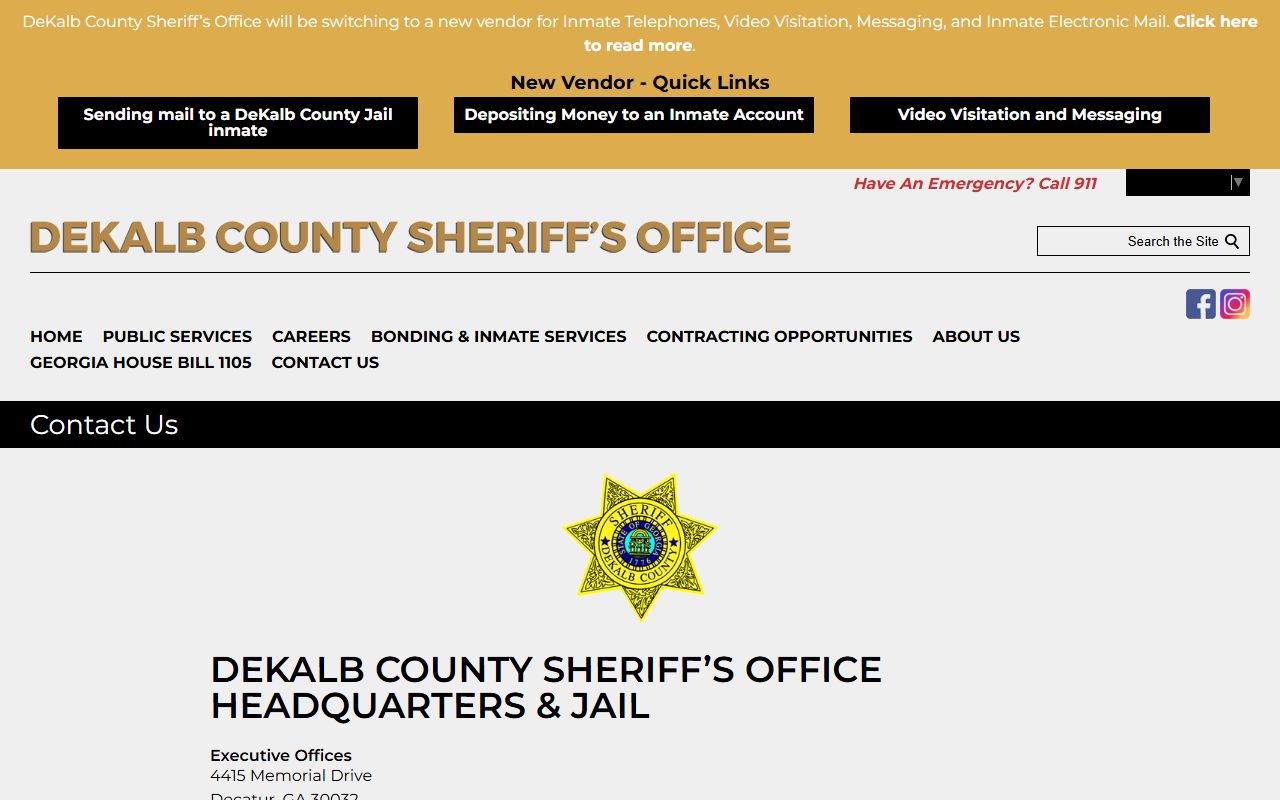
That source supports the distinction between jail, warrant, court services, and online judicial-system channels.
Search DeKalb County Arrest Records
Use the record channel that matches the question. Current custody questions start with the Sheriff's inmate lookup and jail lines. Arrest dates, charges, and court dispositions may appear through the DeKalb Online Judicial System. Warrant questions may require the Sheriff's Warrants Unit or Magistrate Court. Police incident and accident records route through DeKalb Police records and GovQA, while court charges route through the court case portal and clerk systems.
- Check whether the person is currently in custody through the Sheriff's inmate lookup or jail contact channels.
- Search the DeKalb Online Judicial System for charges, arrest dates, court dispositions, and hearings.
- For arrest warrants or bench-warrant issues, contact the Sheriff's Warrants Unit or Magistrate Criminal Division.
- For filed charges, read the court docket and charging document in Superior, State, or Magistrate Court.
- For official copies, contact the clerk or agency that maintains the specific record.
For jail roster and booking detail, the custody-focused page is DeKalb County inmate records. For broad case records across civil, criminal, family, probate, and traffic matters, use the court-records workflow rather than a jail-only lookup.
Charges After Arrest in DeKalb County
Charges after arrest are created through formal court or prosecutor action. DeKalb Superior Court materials state that felony charges proceed by indictment returned by the grand jury or by accusation drawn by the District Attorney. After the indictment or accusation is filed with the Clerk, the case is assigned to a Superior Court judge. Misdemeanor cases are prosecuted by the Solicitor-General in State Court. Some lower-level or preliminary steps may begin in Magistrate Court.
| Charging Document | Who Uses It | What It Means in DeKalb |
|---|---|---|
| Complaint or warrant paperwork | Law enforcement, Magistrate Court, or prosecutor | May support arrest, first appearance, preliminary charges, or a lower-court criminal matter. |
| Accusation | District Attorney or Solicitor-General | A prosecutor-filed charging document used in some Georgia criminal cases. |
| Indictment | Grand jury and District Attorney | A grand-jury charging document used for Superior Court felony prosecution. |
The District Attorney and Solicitor-General decide what to prosecute. The arresting agency may list an initial charge, but the filed court charge can be amended, reduced, dismissed, or replaced as the prosecutor reviews the case.
DeKalb County Charge Status
Charge status should be read at the count level. One DeKalb arrest can produce multiple charges, and one case can end with mixed outcomes. A defendant may have one count dismissed, another reduced, and another resolved by plea. That is why a charge list is not the same as a final disposition. Always check the docket, disposition, and sentence before treating a charge as the outcome.
| Status | What It Means |
|---|---|
| Pending | The charge remains active and the court has not entered a final outcome for that count. |
| Amended | The prosecutor or court changed the wording, statute, count, severity, or charge theory. |
| Reduced | The charge moved to a lesser offense, often as part of negotiation or case review. |
| Dismissed | The court or prosecutor ended that count without a conviction on that count. |
| Nolle prosequi | The prosecutor declined to continue prosecution on that charge. |
| Convicted | The charge resulted in guilt through plea, verdict, or other adjudication. |
DeKalb Charges vs Convictions
Being charged after arrest is not the same as being convicted. A charge is an allegation in a law-enforcement, prosecutor, or court record. A conviction is a final outcome showing guilt. DeKalb court charge records may show allegations that never become convictions. They may also show charges that were dismissed after a diversion court result, reduced through plea, or restricted after legal approval.
| Point | Charge | Conviction |
|---|---|---|
| When it appears | After arrest, warrant, accusation, indictment, or complaint. | After plea, verdict, or final adjudication. |
| What it proves | Only that an offense was alleged or filed. | That guilt was entered or found for that count. |
| Where to check | Jail detail, warrant paperwork, court docket, or charging document. | Disposition, judgment, sentence, or certified final disposition. |
| Can be restricted | Some non-conviction records may qualify for restriction. | Eligibility depends on Georgia law and the specific outcome. |
Restricted Arrest Records in DeKalb
Georgia record restriction is a major issue for DeKalb arrest records and charge records. The GBI criminal-history record restriction page explains O.C.G.A. 35-3-37. Eligible criminal-history records may be restricted from non-criminal-justice access when approved by the prosecutor or court. For arrests after July 1, 2013, there is no GBI application process; the person contacts the prosecutor. For older arrests, the person applies through the arresting agency.
The manifest image from the GBI record restriction source is included because charge and arrest visibility often turns on restriction rules.
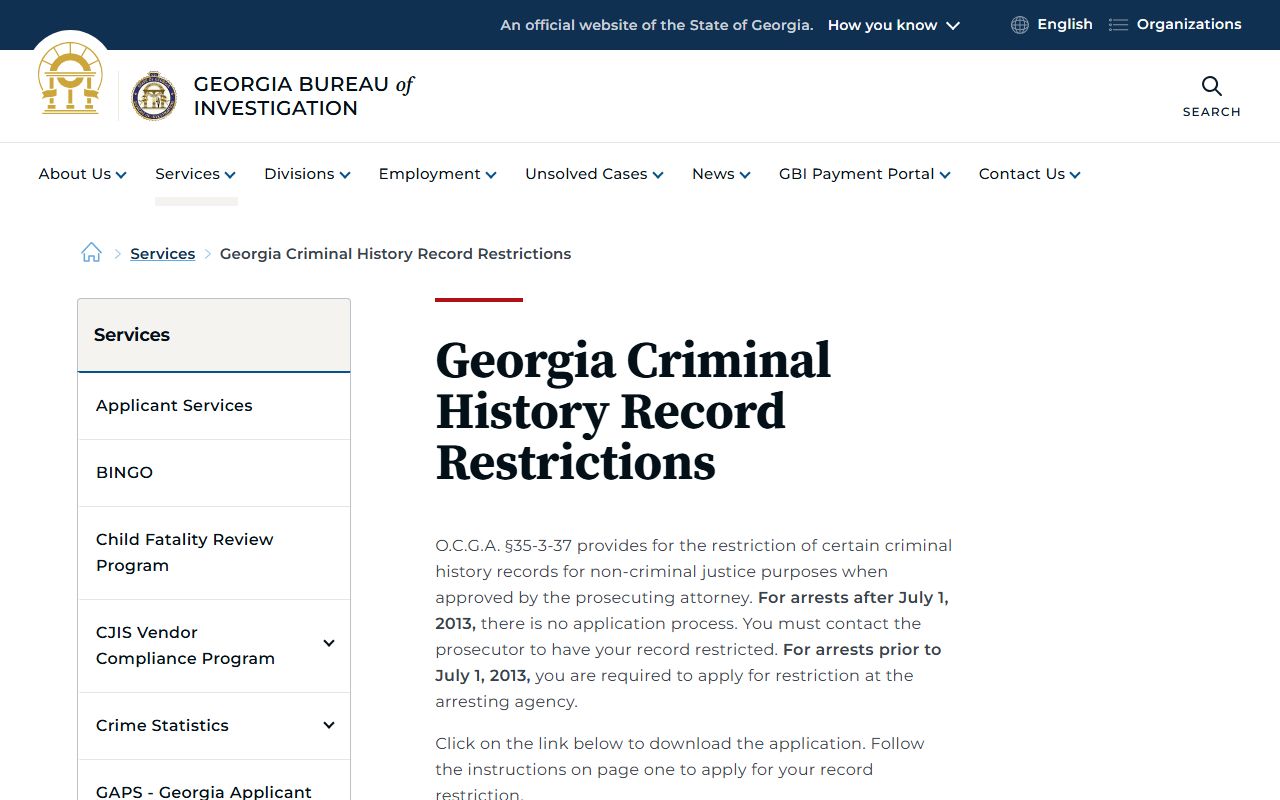
Restriction can limit criminal-history access, but it does not automatically erase every court docket, jail entry, agency record, or archived file.
| Record Type | Likely Restriction Issue | DeKalb Contact Path |
|---|---|---|
| Felony arrest or charge | Prosecutor approval or court order may be needed. | District Attorney for felony matters. |
| Misdemeanor arrest or charge | Solicitor-General review may be relevant. | Solicitor-General for State Court misdemeanor matters. |
| Agency arrest record | Arresting agency process may apply for older arrests. | Sheriff, DeKalb Police, or other arresting agency. |
| Court file | Sealing can require a separate court order. | The court and clerk that maintain the case. |
Public Access to Arrest Charges
The Georgia Open Records Act, O.C.G.A. 50-18-70 through 50-18-74, supports access to many government records unless an exemption, court order, or statute restricts disclosure. Court charge records are usually requested through the clerk and court system, while Sheriff's, Police, jail, incident, accident, or agency arrest records use agency open-records paths. Some records may be withheld because they involve juveniles, sealed proceedings, active investigations, protected identifiers, domestic-violence safety issues, or mental-health facts.
DeKalb Police records and public-safety open-records requests route through official county channels. The manifest includes the DeKalb Police contact and records page.
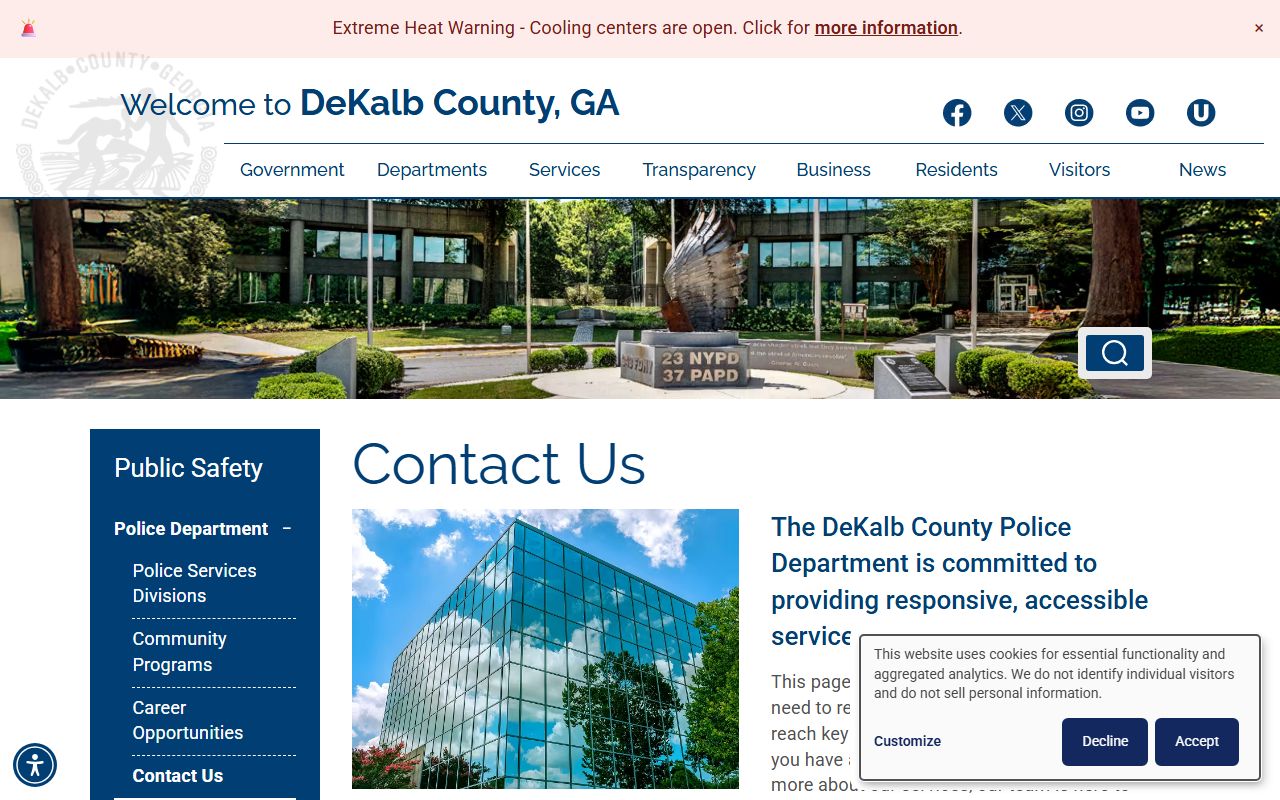
Police records can document an incident or arrest, but the court charge record and final court outcome come from the court and prosecutor path.
Statewide Criminal Lookup Limits
Some statewide tools are related to criminal-record research but are not substitutes for DeKalb arrest records or court charges. The GBI sex offender registry is a statewide registry for qualifying offenders. It is not a full arrest search and does not list every person charged in DeKalb County. Georgia criminal-history access, record restriction, and court-file access each use different rules.
The manifest includes the GBI registry source for this charge-record page.
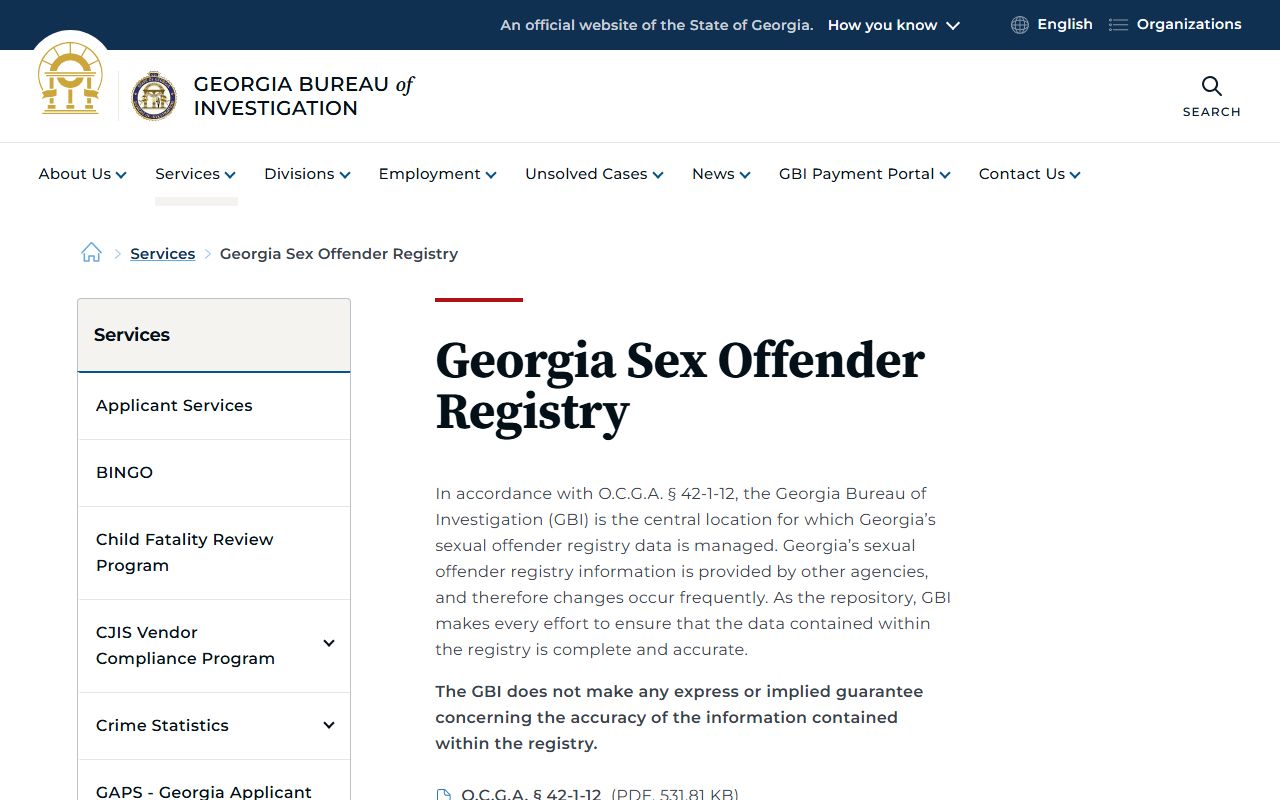
Use registry results only for the purpose they serve. They should not be treated as a DeKalb court docket, arrest roster, or full criminal case file.
Note: A jail booking, a filed charge, and a conviction are three different records with different access rules.
DeKalb Arrest and Charge Contacts
The Sheriff's Office operates jail, court services, and warrant-processing functions. Its main executive office number is 404-298-8111. Jail Operations are at 4425 Memorial Drive, Decatur, GA 30032, phone 404-298-8145. Court Services Operations are at 556 N. McDonough Street, Room B110, Decatur, GA 30030, phone 404-371-2570. The Warrants Unit is 404-298-8200, and the 24-Hour Communications Center is 404-298-8400.
For court charges, felony matters route to the District Attorney and Superior Court, misdemeanor matters route to the Solicitor-General and State Court, and criminal arrest warrant matters can involve Magistrate Court at 3630 Camp Circle. Use the court or agency named on the record. A warrant inquiry, a booking question, a police incident report, and a certified court disposition are different requests.
DeKalb Sheriff's Warrants Unit
4415 Memorial Drive
Decatur, GA 30032
404-298-8200
Warrant and fugitive-related inquiries
DeKalb District Attorney
556 N. McDonough Street, Suite 700
Decatur, GA 30030
404-371-2561
Felony prosecution and related records questions